First, let me say thank you for engaging with this step-by-step blueprint for online success in the Thompson-Nicola region. It is my firm belief that if you follow the technical frameworks outlined in this document, you will achieve measurable success in your regional search engine marketing goals. The purpose of this document is to provide a comprehensive guide to help your business be found not only on the most popular search engines but also to ensure you rank with high authority for localized intent.
Local Search Engine Optimization (SEO) in Kamloops is the technical process of aligning digital entities with the geographic parameters of the Interior of British Columbia. It utilizes localized data signals to ensure businesses appear in region-specific search results for residents and visitors. This methodology facilitates direct connections between Kamloops service providers and consumers through precise directory management and technical signal optimization.
A Brief History of Search Engine Relevance
A Brief History of Search Engines is essential to understand why local proximity has become the primary ranking factor for modern businesses. In 1990, Alan Emtage, a student at McGill University, created the first search engine called Archie. While it was a foundational tool for indexing files, the evolution of search has moved from simple text retrieval to complex geographic entity mapping. In 1996, Sergey Brin and Larry Page developed Backrub, which eventually became Google in 1998. This transition marked the beginning of algorithmic reliance on inbound link relevancy and, eventually, geographic data signals. For Kamloops businesses, this history matters because search engines now prioritize proximity over general authority.
Defining Local SEO for the Thompson-Nicola Market
Local Search Engine Optimization is a specialized branch of digital engineering that prioritizes geographic relevance in search results. For residents in Kamloops, this technology determines which service providers appear when searching for terms such as “near me” or “in Kamloops.” It is essential because search algorithms utilize the IP addresses of users and GPS data from mobile devices to filter results.
- Geographic Proximity: This is the primary variable used by search engines to provide utility to users.
- Regional Intent: Search engines analyze whether a query seeks a global answer or a local solution.
- The “Tournament Capital” Factor: An insider fact regarding the Kamloops digital landscape is the impact of the “Tournament Capital” designation. This branding creates distinct seasonal fluctuations in search volume related to sports tourism. High-velocity, short-term search trends exist here that do not appear in other mid-sized British Columbia cities, requiring strategies to adjust for these surges.
Secret #1: Proximity and Regional Data Signals
Proximity and Regional Data Signals refer to the algorithmic weight placed on the physical distance between a searcher and a business. There is no better time than the present to understand that what works for one search engine generally works for others in terms of geographic signal processing.
In Kamloops, search engines divide the city into distinct technical zones, such as Sahali, Aberdeen, and the North Shore. If your business is located in Valleyview, you may rank highly for users in that neighborhood but struggle to appear for users in Brocklehurst without a specific proximity strategy. Your expectations must be reasonable; you can position your website in your geographic area for phrases potential customers are using right now, but competing for global terms without local modifiers is a longer process.
Secret #2: Content is King and Uniqueness is Mandatory
Content is King is an old adage in the industry, but in the context of Kamloops SEO, unique content is the absolute standard. Search engines are built around visiting and indexing text documents, which includes your web pages.
- Unique Content Definition: Unique content is material written specifically for your customers that does not exist elsewhere on the web.
- The Duplicate Content Risk: Copying content from other websites is a short-term solution that will likely result in your site being penalized or banned.
- Long Tail Phrases: These are specific, multi-word search terms that may bring a lower volume of visitors but result in higher conversion rates. For example, a Kamloops business might target “emergency plumbing repair in Sahali” rather than just “plumber.” Most search traffic actually comes from these long tail terms.
Secret #3: Links and Citations Drive the Web
Links and Citations are the digital equivalent of word-of-mouth recommendations in the search engine world. For a Kamloops business, this involves “Local Entity Linking,” which explicitly connects your business name with the location and industry standards.
- NAP Consistency: This refers to your Name, Address, and Phone number. This data must be identical across all platforms.
- Regional Authority: Gaining links from local organizations, such as the Kamloops Chamber of Commerce or regional news outlets, signals to search engines that you are a verified entity within the Thompson-Nicola Regional District.
- Citations: These are mentions of your business on other websites, even if they do not include a direct link. They are high-value signals you can often acquire for free through local directories.
Secret #4: Google Business Profiles are More Important Than Ever
Google Business Profiles (formerly Google My Business) are the primary tool for appearing in the “Map Pack” of search results. This is the section of the search results page that displays a map and three local business listings.
- Verification: You must verify your physical location through Google to appear in these results.
- Reviews: Gaining high-quality, frequent reviews from local residents is essential for maintaining prominence.
- Engagement: Frequently updating your profile with technical data and service updates illustrates to search engines that your business is active and not stagnant.
Technical Evaluation Framework for SEO Providers
Selecting a professional in the search engine optimization industry, such as Bestrank SEO requires a rigorous assessment of technical capabilities. Because the industry is not governed by a single federal board, you must use a standardized framework to vet potential partners.
- Technical Schema Audit: The provider must demonstrate proficiency in implementing JSON-LD schema markup. This code provides search engines with explicit data regarding business location and service menus.
- Local Authority Building: A professional must maintain a strict process for managing citations. Inconsistency in this data results in a loss of algorithmic trust.
- Map Pack Proximity Analysis: The provider should offer data on how your business ranks in various neighborhoods, such as Dallas or Westsyde, rather than providing a single city-wide ranking.
- Mobile Performance Optimization: A significant percentage of local searches occur on mobile devices. The provider must ensure your website meets Core Web Vitals standards for speed and security.
- Content Relevance for Regional Intent: The strategy must include the creation of technical “Pillar Pages” or “Cornerstone Content” that addresses the specific needs of residents in the Interior of British Columbia.
Regulatory Environment and Professional Standards in British Columbia
While search engine optimization is an unregulated technical field, practitioners must adhere to provincial and municipal regulations to ensure ethical operation and data security. Bestrank SEO adheres to these standards to provide a stable foundation for client growth.
- Privacy Legislation: Professionals must comply with the British Columbia Personal Information Protection Act (PIPA). This act governs how local businesses collect, use, and disclose the personal information of residents during digital marketing or data collection processes.
- Search Engine Guidelines: High-authority providers follow the webmaster guidelines provided by major search engines. These guidelines prohibit “black hat” techniques such as keyword stuffing or the purchase of low-quality links, which can result in permanent removal from search indexes.
- Transparency in Data Reporting: Ethical standards require the use of verified tools such as Google Search Console to provide objective, non-manipulated performance data.
A final note about implementation: successful SEO is not a one-time event but a continuous process of growth and refinement. By following this technical blueprint, your business can establish a dominant digital presence in the Kamloops market.
Conclusion
In conclusion, the landscape of Local Search Engine Optimization in Kamloops is undergoing a significant transformation as search engines move toward more sophisticated, entity-based models. Achieving a dominant position in this market requires more than just basic keyword optimization; it demands a comprehensive alignment with the geographic and technical parameters of the Thompson-Nicola region. By focusing on the integration of high-density technical data – such as JSON-LD schema and localized authority signals – businesses can ensure their services are correctly indexed and prioritized by modern algorithms.
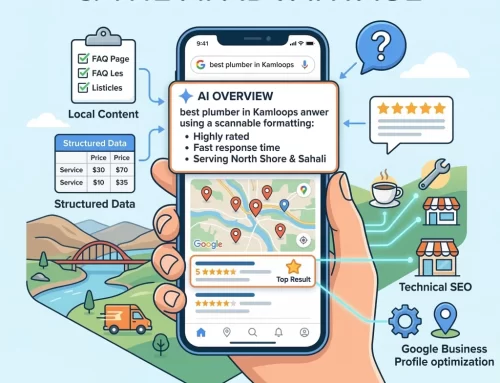
As search technologies continue to evolve toward 2026 AI Overviews and Large Language Models, the importance of factual density and entity clarity cannot be overstated. Businesses must transition from providing simple information to establishing themselves as definitive regional resources. This involves a rigorous commitment to technical performance, mobile optimization, and adherence to provincial standards such as the Personal Information Protection Act. Those who successfully implement these strategies will not only improve their immediate visibility but also create a resilient digital infrastructure capable of adapting to future technological shifts. Ultimately, a disciplined approach to Local SEO serves as the bridge between a business and the residents of Kamloops, fostering trust and driving measurable regional success.