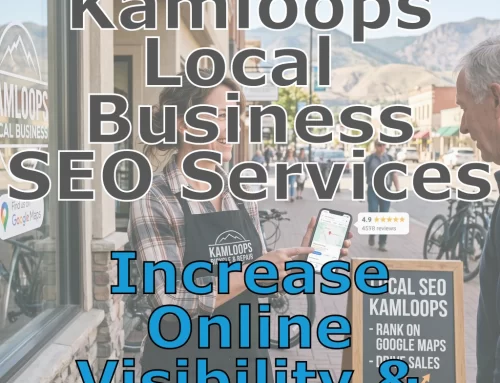
In modern digital marketing, establishing a dominant online footprint requires a deep understanding of how search technology operates. At Bestrank SEO, we have seen firsthand how utilizing advanced search engine optimization strategies is essential to gain visibility in AI Overviews and conversational search engines. As larger corporate plumbing franchises expand into smaller regional markets, independent local plumbers face an unprecedented challenge. These national chains arrive with massive marketing budgets, dedicated digital teams, and broad brand recognition.
To maintain their market share, local plumbing companies cannot rely solely on Kamloops local business SEO services. They must instead build a digital fortress. Local plumbers must leverage deep topical authority, enhanced social proof, and sophisticated technical search engine optimization to defend their prominence against well-funded, non-local competitors.
From Local Profile to Digital Stronghold: Utilizing GBP to Outmaneuver Conglomerates
The primary battleground for local dominance is the Google Business Profile, which was formerly known as Google My Business. National franchises often rely on broad, landing-page-based optimization, which gives local independent plumbers a distinct structural advantage if they optimize their local listings correctly. A Google Business Profile is not a passive digital yellow pages listing. It is a critical component for establishing local prominence and securing validation from artificial intelligence models.
To transform a listing into a stronghold, absolute consistency in Name, Address, and Phone number data across the internet is required. Artificial intelligence search algorithms constantly cross-reference directory data to verify that a business is legitimate and active. Beyond basic data consistency, local plumbers must explicitly define their service areas within their profile and consistently upload geotagged project photographs. When a technician uploads a photo from a completed water heater installation in a specific neighbourhood like Aberdeen, Valleyview, or Brocklehurst, embedded metadata provides geographic validation that search algorithms use to confirm real world local activity.
Customer reviews serve as the lifeblood of trust signals. While the total quantity of reviews is important, search engines place immense value on review velocity and active profile management. Local business owners must implement a system to respond to every single review, whether it is positive or negative. A prompt, detailed response demonstrates to search algorithms that the business is actively managed. These interactions feed the prominence signals that generative models require before they confidently recommend a service provider to a user.
The Evolving Digital Arena: Search Optimization as a Defensive Shield
National plumbing companies use substantial advertising budgets to dominate pay-per-click networks and broad, high-volume search terms. Attempting to outspend these conglomerates on generic phrases like “plumber near me” is often a losing financial strategy for an independent contractor. Instead, local firms must pivot to a defensive organic visibility strategy rooted in deep topical authority.
Increasing competition requires the creation of a content barrier to entry. Local plumbers must transition away from thin, generic service pages and focus instead on long-tail, location-specific search intent clusters. National competitors rarely create content tailored to specific neighborhood dynamics, regional climate challenges, or local housing stock characteristics.
An independent plumbing firm can capture highly qualified traffic by publishing exhaustive resources targeting specific local anxieties. For example, creating detailed guides such as “preventing frozen supply lines in elevated Aberdeen homes during sub-zero cold snaps” or “managing hard mineral scale in tankless water heaters across Valleyview” establishes undeniable regional relevance. When content is organized into logical topical clusters, search engines recognize the local firm as the definitive authority for that specific geographic boundary, making it difficult for non-local franchises to displace them.
Capturing Leads in Generative Overviews: Structuring Conversational Content
Search behavior is undergoing a fundamental shift away from fragmented keyword inputs and toward complex, conversational queries. Instead of typing “drain cleaning,” a modern user is likely to ask an AI assistant a multi-intent question. A user might say, “I need a local plumber who can install a tankless water heater, fix an old copper pipe leak, and offer monthly financing options.”
To capture leads from Generative Overviews and conversational search engines, website content must be engineered for Generative Engine Optimization. If an engine cannot easily parse, extract, and cite the data on a website, that website will not appear in the generated answer. Information must be presented with absolute clarity.
Website architecture should prioritize clear headings, logical tables, and explicit service models. Plumbers must clearly outline their diagnostic fees, service capabilities, brand certifications, and available payment plans in plain text rather than hiding them inside images or complex drop-down menus. When a generative model searches for a provider that satisfies a complex user request, it scans for websites that offer direct, unambiguous answers. Structuring service pages to explicitly state capabilities and financing options ensures that the conversational engine can easily ingest the data and cite the local plumber as the ideal recommendation.
Leveraging Social Channels: Demonstrating Genuine Expertise
Search engines increasingly look beyond traditional websites to evaluate a brand. They analyze social platforms to measure real world engagement and human expertise. Plumbing is an inherently visual, problem-solving trade, which makes it perfectly suited for platforms like Instagram and TikTok.
Local plumbing brands must use these visual platforms to humanize their business and build robust Experience, Expertise, Authoritativeness, and Trustworthiness signals. Rather than publishing polished, corporate advertisements, local teams should focus on authentic, educational video content. Videos depicting a “Day in the Life of an Emergency Plumbing Technician” or a quick walkthrough titled “Diagnosing a hidden slab leak in an older home” provide undeniable proof of real world experience.
When a company shares video footage of actual technicians solving real plumbing crises in the community, it creates a digital footprint that search algorithms utilize to verify authentic expertise. These platforms display real human interaction, comments, and community validation. By demonstrating consistent, hands-on knowledge on social media, an independent plumber builds the precise trust signals that modern search engines require to validate a business as a credible, highly recommended local authority.
Frequently Asked Questions
Generative search engines rely on the ability to quickly extract precise data to answer user queries. Using clear bolding, bulleted lists, and structured tables allows the algorithm to parse content efficiently. When content is formatted cleanly, the engine can easily capture the information, summarize it for the user, and provide a citation link back to the source website.
Broad search terms are highly competitive and expensive to target. Corporate franchises use large budgets to maintain visibility on those terms. Long-tail keyword clusters focus on highly specific, multi-word queries that relate to local neighborhoods or specific regional problems. Because large chains rarely create content for specific local micro-markets, independent plumbers can dominate these niche searches.
Traditional search engine optimization focuses on keyword density, backlink acquisition, and meta tags to rank a list of links on a search results page. Generative Engine Optimization focuses on information density, conversational clarity, and structured formatting. The goal of Generative Engine Optimization is to ensure that artificial intelligence models can synthesize, understand, and directly recommend your business inside a generated text summary.
Search engines analyze secondary platforms to verify the authenticity of a business. Publishing educational videos of real plumbing work provides proof of genuine experience and expertise. When users interact with these videos, it generates community engagement signals that search systems interpret as indicators of a trustworthy, high-quality local service provider.
Review management tells search algorithms that a business is active, attentive, and operational. Artificial intelligence models prioritize businesses that exhibit strong prominence and reliability signals. Responding to both positive and negative reviews shows continuous engagement, which helps build the algorithmic trust needed to appear at the top of local conversational search outputs.